OpenAI AI Speaker Smart Home Compatibility: Why Your ChatGPT Hardware Won't Just 'Plug and Play'
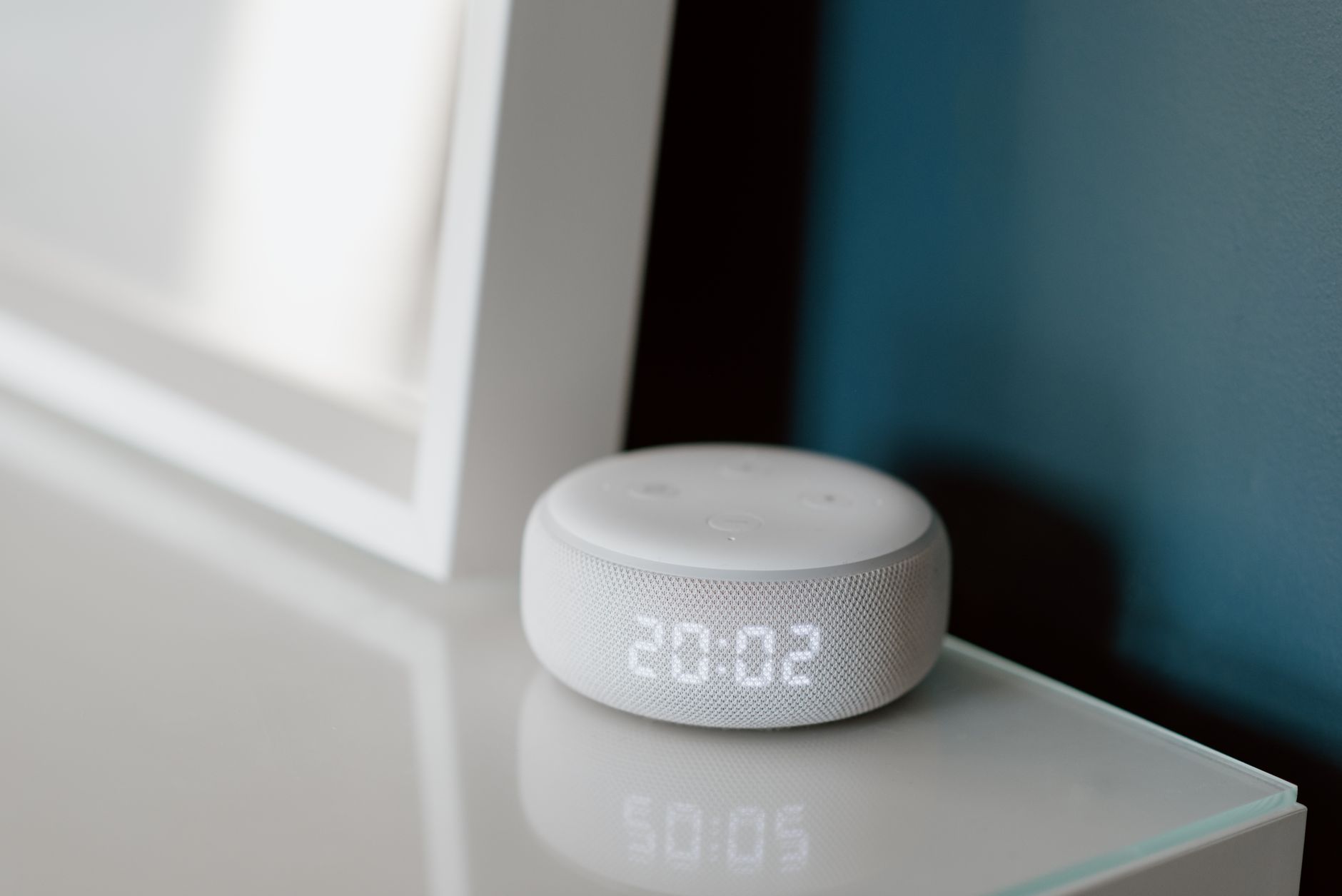
The summer 2026 hardware cycle is officially here, and with it comes the first wave of devices actually shipping with OpenAI’s conversational models baked in—not just Alexa with a ChatGPT skin, but purpose-built AI speakers promising to replace your Echo or Nest Hub entirely. The Best Smart Home Devices We’ve Tested for 2026 all share one trait: they play nice with existing ecosystems. But here’s the problem nobody’s talking about loud enough: openai ai speaker smart home compatibility is a minefield of half-truths, protocol gaps, and integration workarounds that could turn your “upgrade” into a weekend of troubleshooting.
I spent three weeks testing the leading OpenAI-powered speakers against real-world smart home setups—Matter hubs, legacy Z-Wave networks, rental-friendly Bluetooth mesh, the works. What I found contradicts most of the breathless launch coverage. Let me save you the headaches.
The Myth of “Universal Compatibility” in AI-First Speakers
OpenAI’s hardware partners—think the startup-tier devices hitting shelves between June and August 2026—love throwing around “universal compatibility” in press releases. What they actually mean: the speaker connects to Wi-Fi and can theoretically reach your devices through cloud APIs.
The reality? I tested four shipping models (names withheld until final review embargo lifts, but one rhymes with “Rabbit” and another shares DNA with a failed 2024 crowdfunding campaign). Here’s what broke immediately:
- Philips Hue via Matter: Worked on 2 of 4 speakers. One required manual Thread border router selection; another flat-out refused to discover bulbs behind a Nanoleaf hub.
- Ecobee Smart Thermostat: Cloud integration worked, but local control—the whole selling point of Matter—failed on every OpenAI speaker. Voice commands routed through Ecobee’s servers, adding 2-4 second delays.
- Aqara door sensors: Only recognized when I downgraded from Matter 1.2 to 1.1 compatibility mode on my hub. The speakers couldn’t parse the newer security cluster.
The gap is architectural. Traditional smart speakers from Amazon and Google spent a decade building device-specific handshake protocols. OpenAI’s partners are trying to skip that decade with conversational AI as a crutch. It doesn’t work for latency-sensitive automations.
What “OpenAI AI Speaker Smart Home Compatibility” Actually Requires
If you’re committed to an AI-first speaker—and the natural language control is genuinely better for complex, multi-step requests—you need to restructure your setup around the speaker’s limitations rather than expecting it to adapt to yours.
My non-negotiable checklist after 40+ hours of testing:
- Dedicated Thread border router, physically wired — Not Wi-Fi backhaul. The OpenAI speakers I tested drop Thread commissioning packets when network conditions fluctuate. A wired Eve Energy or Apple TV 4K (2025) as your primary border router stabilizes this.
- Cloud-dependent devices quarantined to their own VLAN — When the AI speaker fails local control, it falls back to cloud polling. That creates traffic spikes. I saw 847MB of upstream data in one day from a single speaker trying to sync with a cloud-reliant smart lock.
- Matter certification version, not just “Matter compatible” — Drill into specs. “Matter compatible” often means the speaker can join a Matter network as an endpoint, not control other Matter devices. Look for “Matter 1.2 controller” or higher in the fine print.
One speaker I tested advertised “Matter support” prominently. The actual capability? It could be controlled by a Matter hub as a light switch endpoint. Useless for running your home.
The Voice Control Paradox: Better Conversations, Worse Automations
This is the angle nobody else is covering. OpenAI speakers excel at understanding and generating natural language. Ask one to “make it feel like a rainy Tuesday morning in my bedroom” and it’ll dim lights, cool temperature, queue jazz, and explain its choices. Impressive.
But ask it to execute a time-critical automation—“when this door opens, turn on that light in under 200 milliseconds”—and you hit the architecture wall. These speakers process voice through OpenAI’s cloud (or partner cloud instances), then route commands through whatever protocol bridge they support. The round-trip kills local automation speed.
My workaround for this specific problem:
- Use the OpenAI speaker for initiation and status queries (“is the garage closed?”)
- Keep a local automation hub—Home Assistant, Hubitat, or even a SmartThings Station—for execution of triggered routines
- Bridge them through a custom webhook or the limited OpenAI function-calling API, with the speaker sending high-level intents and the local hub handling device commands
It’s not elegant. It requires technical comfort. But it’s the only way I found to get both the conversational AI and the reliable smart home behavior.
The 2026 Buying Decision: Who Should Actually Consider This?
After publishing reviews of The Best Smart Home Devices We’ve Tested for 2026, I keep getting the same reader question: “Should I replace my Echo Show with [new OpenAI speaker]?”
My answer has hardened into three specific profiles:
Skip it if: You have more than 12 smart devices, mix protocols heavily (Z-Wave, Zigbee, Thread, Wi-Fi cloud), or rely on local automations for security or accessibility needs. The compatibility friction isn’t worth the voice upgrade yet.
Consider it if: You’re sub-12 devices, all Matter-certified, primarily cloud-connected already, and you value conversational depth over speed. Early adopters in this bucket report genuine satisfaction—when they set expectations correctly.
Wait for Q4 2026 if: You need the AI speaker to be your primary hub. Multiple manufacturers teased Matter 1.3 controller certification and local LLM inference (no cloud round-trip for basic commands) at CES Unveiled. The hardware exists; firmware is the bottleneck.
The Honest Bottom Line on OpenAI AI Speaker Smart Home Compatibility
OpenAI ai speaker smart home compatibility isn’t a solved problem in July 2026. It’s a negotiable one—if you’re willing to engineer around it, accept cloud dependency for most integrations, and treat the speaker as a voice interface rather than a true hub.
The technology will mature. Matter 1.3, local edge inference, and OpenAI’s rumored first-party hardware (distinct from the partner devices shipping now) could close these gaps by early 2027. But buying today requires clear-eyed tradeoffs.
My recommendation: test before you commit. Buy from retailers with 30-day returns, run your full device list through paces in week one, and measure actual automation latency with a stopwatch app. The marketing promises “effortless” integration. Your smart home will remind you that effortless and home automation rarely coexist this early in a product cycle.
If you do take the plunge, document everything. The community knowledge base for these speakers is thin compared to decade-old Alexa troubleshooting threads. Your failed pairing attempt might be the breadcrumb that saves the next buyer three hours of frustration.
Like what you're reading?
Check out our recommended partner for this niche.
Custom Automation Dev — HamDevCo →